
Carbon Capture
What is Carbon Capture and Storage (CCS)?
Carbon Capture and Storage (CCS) is a process that aims to reduce carbon dioxide (CO₂) released into the air from factories and power plants.
Here’s how it works:
• Capture: CO₂ is collected from industrial emissions.
• Transport: The captured gas is moved through pipelines or ships.
• Storage: It’s injected deep underground into rock layers or old oil and gas wells.


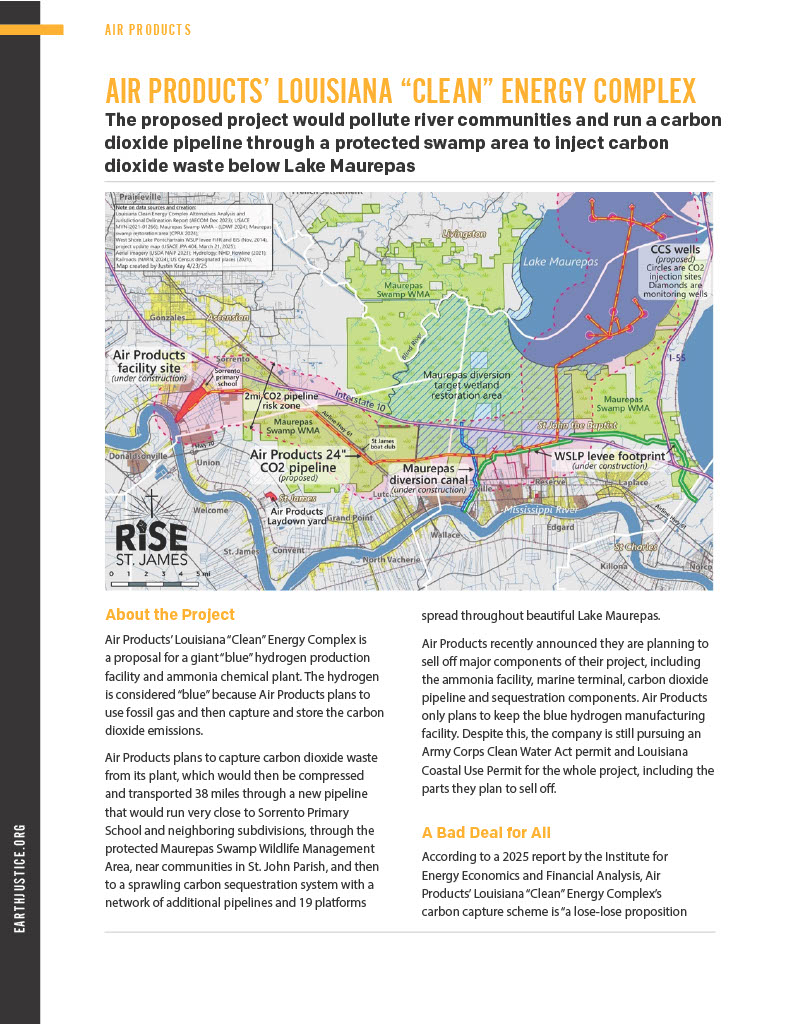

Carbon dioxide (CO₂) is a colorless, odorless gas produced by natural processes like breathing and decay, as well as by burning fossil fuels. Rising CO₂ levels are driving climate change, sparking global “carbon neutrality” efforts and major projects in Louisiana focused on carbon capture and storage. But while most headlines focus on emissions, few address the potential dangers of CO₂ at ground level, especially in emergencies such as pipeline explosions or storage failures.





In this episode, Ms. Sharon C. Lavigne, Founder & Director of RISE St. James, joins Attorney Caitlion O. Hunter, the organization’s Research and Policy Coordinator, to break down the basics of Carbon Capture and Storage (CCS), explaining what it is, how it works, and why many communities across Louisiana are questioning whether it’s truly a solution or just another industrial experiment with serious risks.

The U.S. is expanding CO2 pipelines. One poisoned town wants you to know its story
Updated September 25, 20239:05 AM ET
By Julia Simon, NPR